
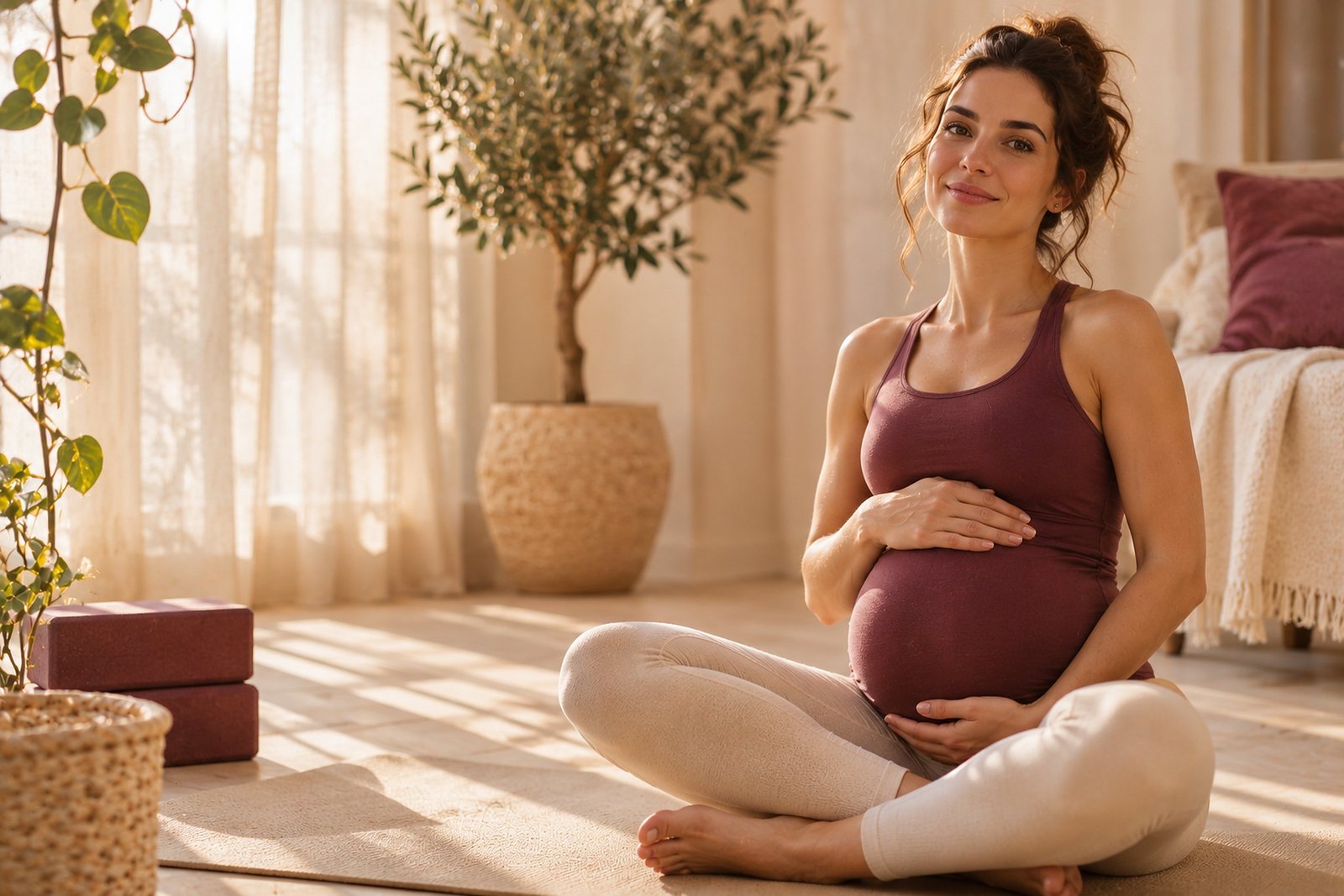
For most healthy pregnancies, staying active is one of the kindest things you can do for yourself and your baby. Here is what the experts recommend, explained simply.
Key points
- Most women with a healthy pregnancy can and should stay active, after checking with their care provider.
- Aim for 150 minutes of moderate activity a week, plus gentle strength work.
- Walking, swimming, stationary cycling and prenatal yoga are excellent choices.
- Stop and call your doctor if you notice bleeding, pain, dizziness or reduced baby movements.
Why staying active helps you and your baby
Not so long ago, pregnant women were advised to slow right down. Today, obstetric organisations such as the American College of Obstetricians and Gynecologists (ACOG) and the World Health Organization encourage most women with a healthy, uncomplicated pregnancy to keep moving.
Regular activity can ease back pain and constipation, improve sleep and mood, help with healthy weight gain and may lower the risk of gestational diabetes and pre-eclampsia. It also builds the stamina and strength that labour and the newborn weeks will ask of you.
First step: talk to your doctor or midwife before starting or continuing an exercise routine, so they can check that it is right for your pregnancy.
How much is recommended
- Aim for at least 150 minutes of moderate-intensity activity a week, for example 30 minutes on five days.
- Add gentle muscle-strengthening exercises on two days.
- If you were not active before pregnancy, start with as little as 5 to 10 minutes a day and build up gradually.
- If you already ran or trained regularly, you can usually continue in an adapted form, with your care provider’s approval.
Use the talk test: you should be able to hold a conversation while exercising.
The best activities during pregnancy
- Walking: free, flexible and possible right up to the end.
- Swimming and water aerobics: the water supports your weight and relieves pressure on the joints.
- Stationary cycling: cardio without the risk of falling.
- Prenatal yoga and Pilates: great for posture, breathing and pelvic floor awareness. Choose classes designed for pregnancy.
- Light strength training: light weights or resistance bands with controlled movement.
- Pelvic floor exercises: every day, throughout pregnancy and after birth.
What to avoid
- Contact sports and activities with a high risk of falls or impact, such as horse riding, skiing, gymnastics or martial arts.
- Scuba diving.
- Exercising in high heat or humidity, including hot yoga.
- Lying flat on your back for long periods after the first trimester, as the weight of the uterus can reduce blood flow. Use an incline or lie on your side instead.
- Exercising to exhaustion or holding your breath while lifting.
Adapting as your body changes
First trimester: fatigue and nausea are common. Shorter, gentler sessions are perfectly fine.
Second trimester: many women feel their best. Focus on posture, glutes, back and pelvic floor, and avoid lying flat on your back.
Third trimester: your centre of gravity shifts, so choose stable, low-impact movement such as walking, swimming and mobility work. Slow down whenever your body asks.
At every stage: warm up and cool down, drink plenty of water and wear a supportive bra.
Warning signs: stop and call your doctor
Stop exercising and contact your doctor or midwife straight away if you notice:
- vaginal bleeding or fluid leaking from the vagina
- regular, painful contractions
- dizziness, feeling faint or a severe headache
- chest pain, a racing heartbeat or shortness of breath before you start exercising
- calf pain or swelling
- muscle weakness affecting balance
- a change in your baby’s movements
Your body is doing extraordinary work. Movement during pregnancy is about feeling good, not about performance.
Sources
This guide is for general information. Every pregnancy is different, so please ask your doctor or midwife what is right for you. See our Medical Disclaimer.