Water supports almost every function in the body, from energy and concentration to skin and digestion. Here is a simple, realistic way to get enough.
Key points
- EFSA suggests about 2.0 litres a day for women, from food and drinks combined.
- That usually means about 6 to 8 glasses of drinks a day.
- Drink more in hot weather, with exercise and while pregnant or breastfeeding.
- Pale straw-coloured urine is a simple sign you are well hydrated.
How much is enough?
The European Food Safety Authority (EFSA) suggests that adult women aim for about 2.0 litres of water a day in total, and men about 2.5 litres, in normal temperatures and with moderate activity. That total includes water from food as well as drinks.
Roughly 70 to 80% usually comes from drinks, which for most women means around 1.6 litres, or 6 to 8 glasses. The rest comes from food such as fruit, vegetables, soups and yoghurt.
When you need more
- Hot weather, especially Greek summers
- Exercise and sweating
- Pregnancy and breastfeeding
- Fever, vomiting or diarrhoea
Signs you need to drink more
Feeling thirsty, dark yellow urine, a dry mouth, headaches, tiredness and difficulty concentrating can all be signs that you are not drinking enough. Pale straw-coloured urine is a simple, useful guide.
What counts
Water is the best choice: no sugar, no calories. Sparkling water, unsweetened tea and coffee, milk and herbal infusions also count. Juices and soft drinks hydrate too, but they add sugar, so keep them small.
Easy ways to drink more
- Start the day with a glass of water before your coffee.
- Keep a bottle on your desk and in your bag.
- Have a glass with every meal.
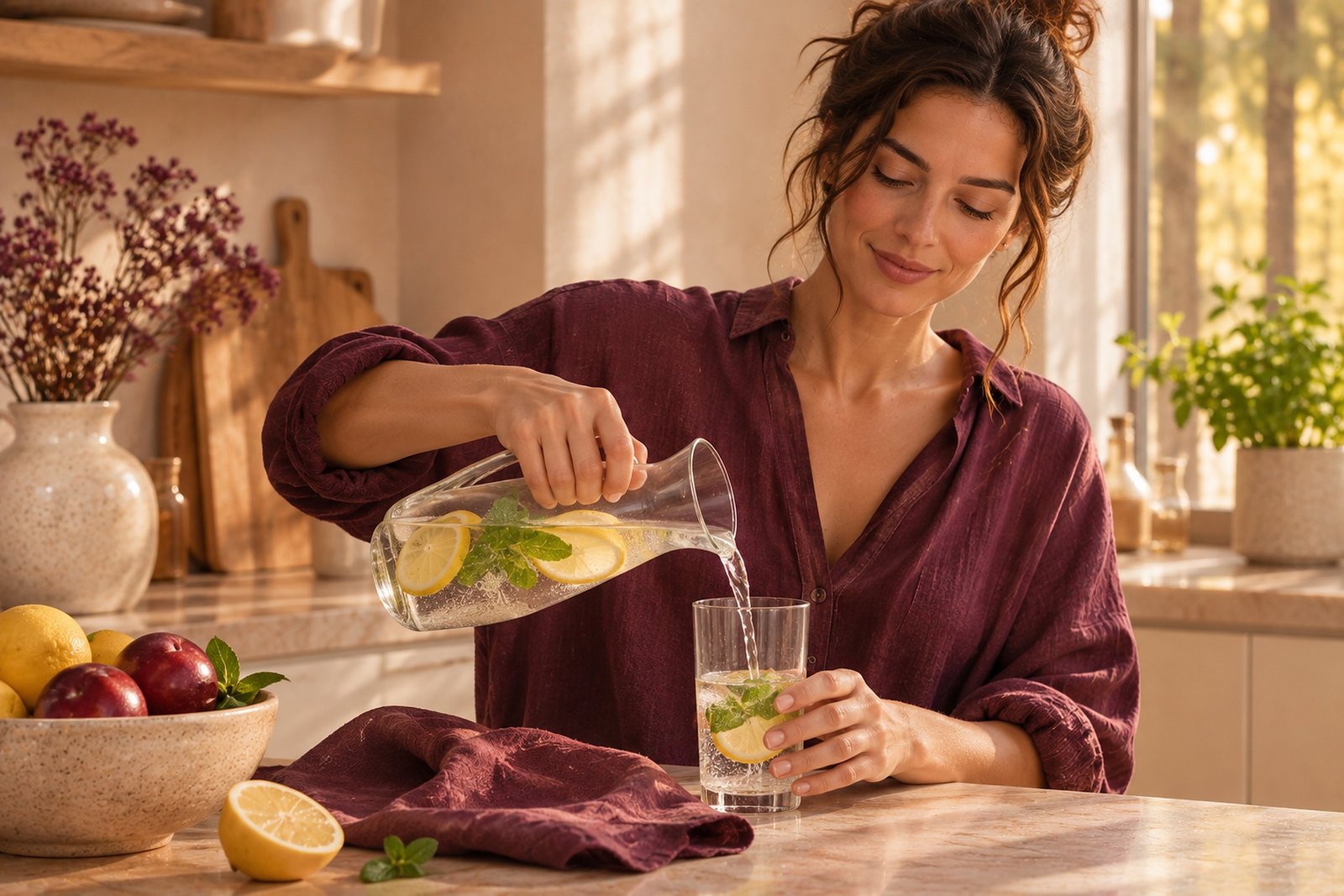
- Flavour it naturally with lemon, cucumber, mint or berries.
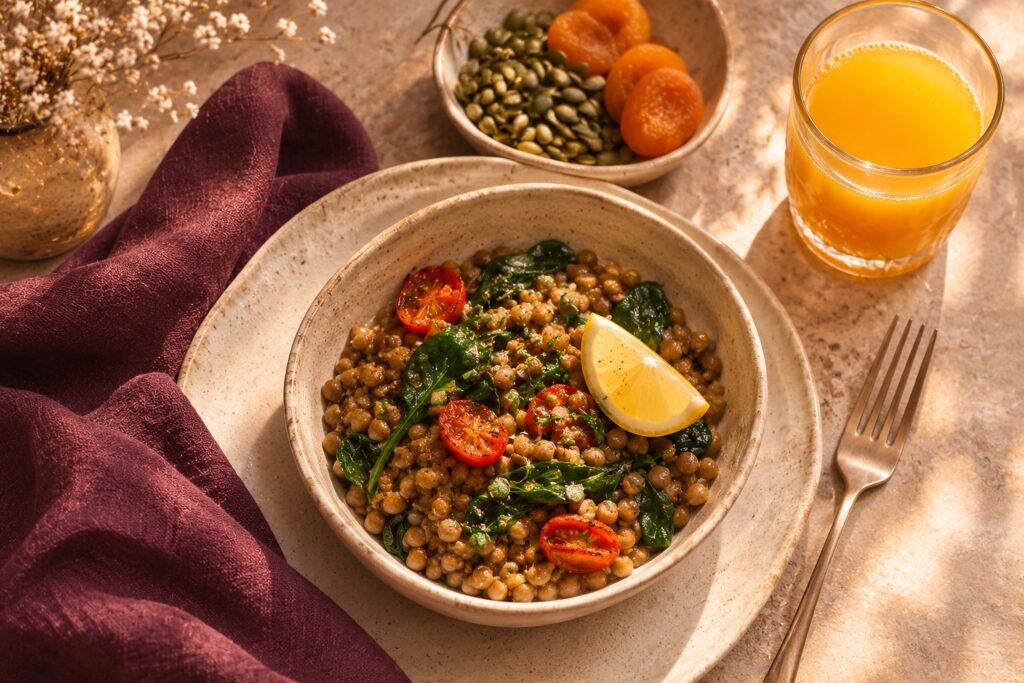
- Eat water-rich foods: watermelon, cucumber, tomatoes, oranges and soups.
You do not need to force litres down. Steady sips through the day work better than catching up in the evening.
Sources
This guide is for general information and does not replace personal advice from a health professional. See our Medical Disclaimer.