
Feeling tired all the time? Low iron is one of the most common reasons for women, and one of the easiest to support through food.
Key points
- Women aged 19 to 50 need about 14.8mg of iron a day; after 50, about 8.7mg.
- Combine plant sources of iron with vitamin C to absorb more.
- Drink tea and coffee between meals, not with them.
- Ask your doctor for a blood test before taking supplements.
Why iron matters for women
Iron helps your body make haemoglobin, which carries oxygen in the blood. Because of monthly periods, women of reproductive age need much more than men, and low iron is one of the most common nutritional problems in women worldwide.
How much do you need?
- Women aged 19 to 50: about 14.8mg a day
- Women over 50 (after menopause): about 8.7mg a day
Needs can be higher if you have heavy periods. During pregnancy, your midwife or doctor will check your iron levels.
The best iron-rich foods
From animal foods (easier to absorb): red meat, chicken and turkey, fish such as sardines, and eggs.
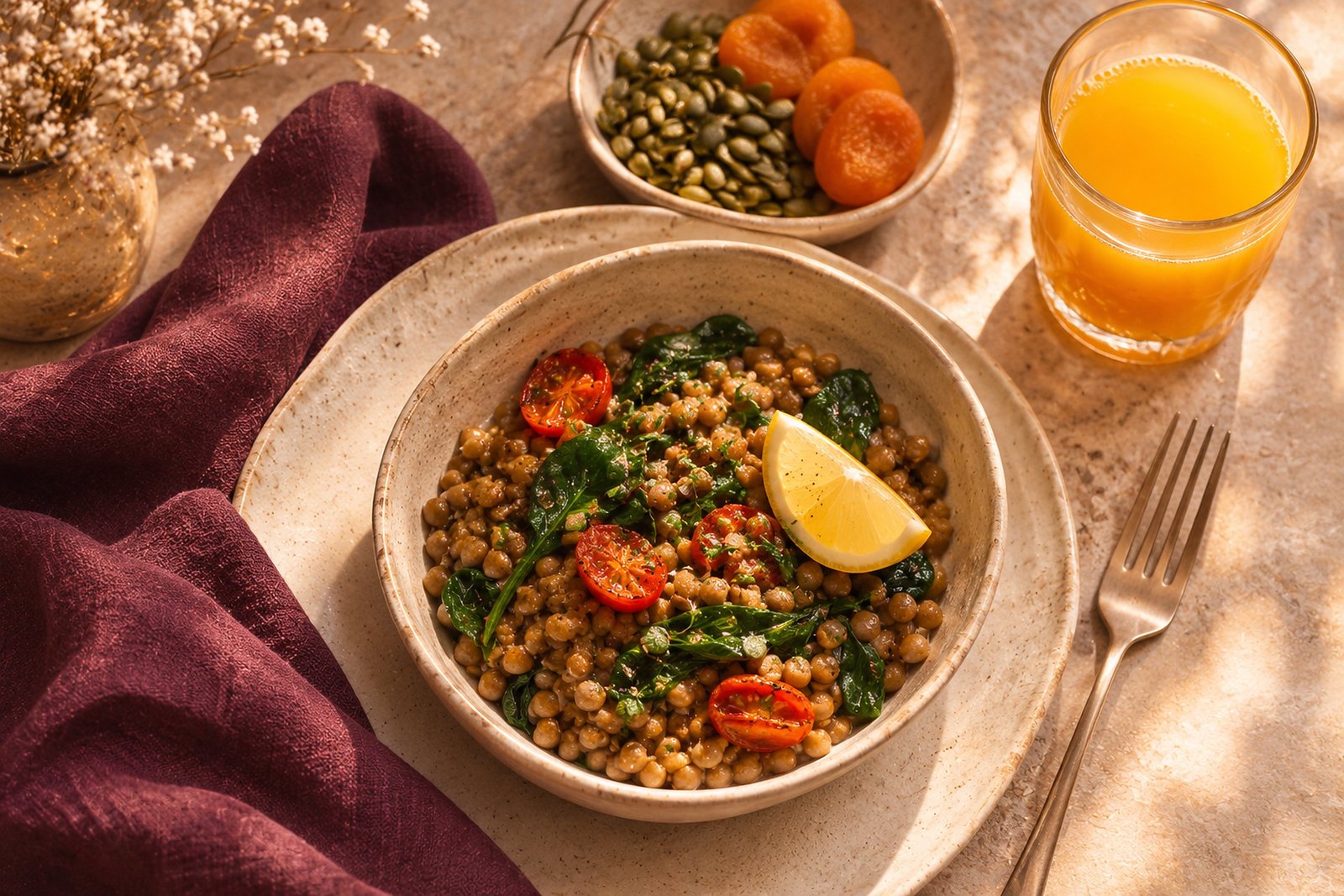
From plants: lentils, chickpeas and beans, tofu, dark green leafy vegetables such as spinach, pumpkin and sesame seeds, dried apricots and figs, wholegrains and iron-fortified breakfast cereals.
How to absorb more of it
- Add vitamin C. Pair plant iron with tomatoes, peppers, citrus fruit, strawberries or a small glass of orange juice.
- Move your coffee and tea. They reduce iron absorption, so drink them between meals rather than with them.
- Mix sources. A little meat or fish alongside beans or greens helps your body absorb more of the plant iron.
Easy win: lentil soup with a squeeze of lemon, followed by an orange, is an iron-friendly lunch.
Signs of low iron
Tiredness, lack of energy, shortness of breath, a pale complexion, headaches and noticeable heart palpitations can all be signs of low iron. Because they are also common for other reasons, the only way to know is a simple blood test. Speak to your doctor before taking iron supplements, as too much iron can be harmful.
This guide is for general information and does not replace personal advice from a health professional. See our Medical Disclaimer.